

Birch is the third most abundant tree in the European North and the Baltic region, yet it remains largely underutilised. Fast-growing, widely distributed and offering dense, strong diffuse-porous wood, birch is well suited for pulp, veneer, plywood, furniture, flooring, joinery and structural timber.
Text: The Value:Birch network
The main barriers to greater value creation include logistics systems not tailored for efficient sorting, transport, and mill distribution, missing standardised grading, and limited quality databases. The SNS network VALUE:BIRCH has brought together researchers, industry partners and students across Northern Europe to address these barriers and expand markets for birch beyond firewood. The mission is to aggregate and share knowledge, identify critical gaps, and foster collaborative solutions that increase value-specific utilisation of birch throughout the forest value chain.
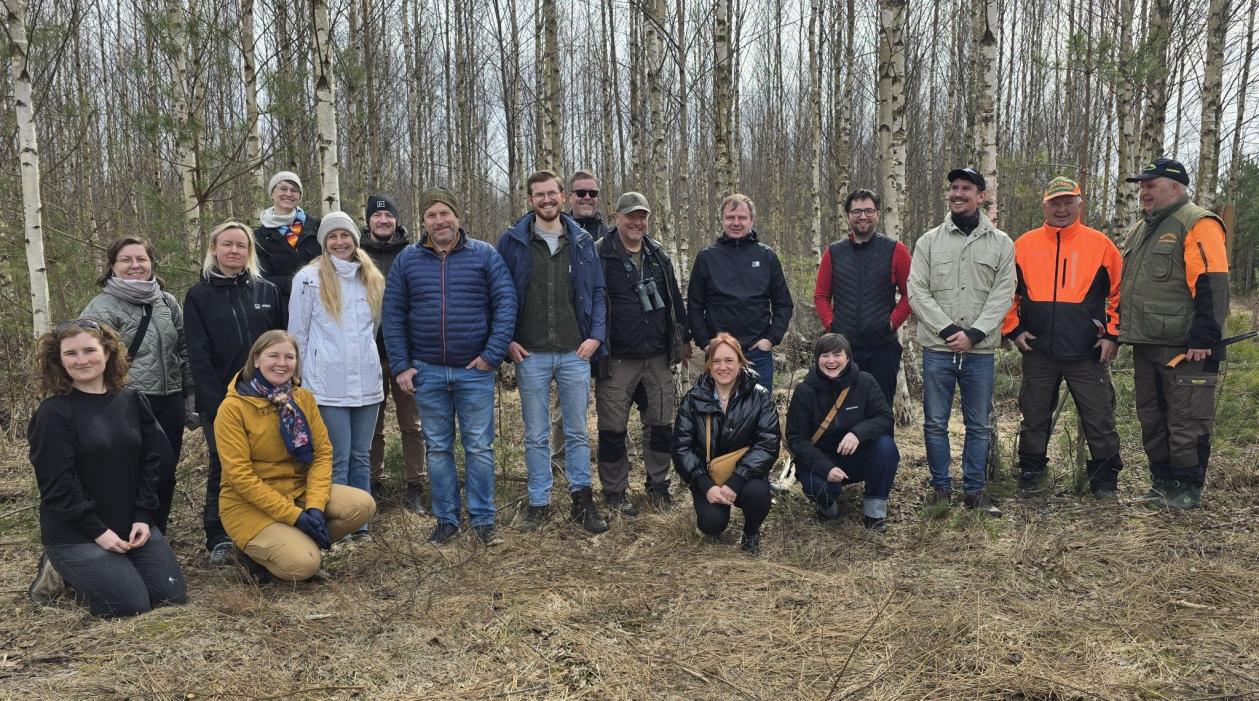
Photo: VALUE:BIRCH
Core activities of the network in 2025 and until now in 2026 were the network meetings in Borås, Sweden, 2025, and North Rhine-Westphalia, Germany, 2026, which combined technical presentations, laboratory- and field visits, as well as contributions of bachelor’s, master’s and PhD students.
Forest visits fostered discussion on tree breeding and silviculture, as well as challenges related to logistics and the promotion of the species. The programme focused on grading, strength properties, and quality assessment, while also creating space for exchange between countries with different industrial contexts. The network meetings help connect previously separate initiatives and strengthen the basis for joint research and innovation activities.
Through the network activities in 2025 and 2026, birch grading was identified as a means to open the market for birch into other standardised product segments, and this became one of the main focus areas for the network.
VALUE:BIRCH illustrates how a research and industry network can help identify and unlock the potential of an underutilized hardwood resource by aligning expertise across countries and value-chain links. The VALUE:BIRCH activities produced concrete collaborative outcomes and identified a shared agenda for future work on grading, logistics, mobilization, and market development. As such, the network provides both a practical platform for cooperation and a model for strengthening resilient, knowledge-based forest value chains in Europe
If you work with birch research, processing, product development, or forest management and would like to join the network or attend upcoming events, please contact Katrin Zimmer, NIBIO. Collaboration can increase mobilisation and value-specific use of birch across Europe and take this abundant, high-quality resource well beyond its traditional uses!